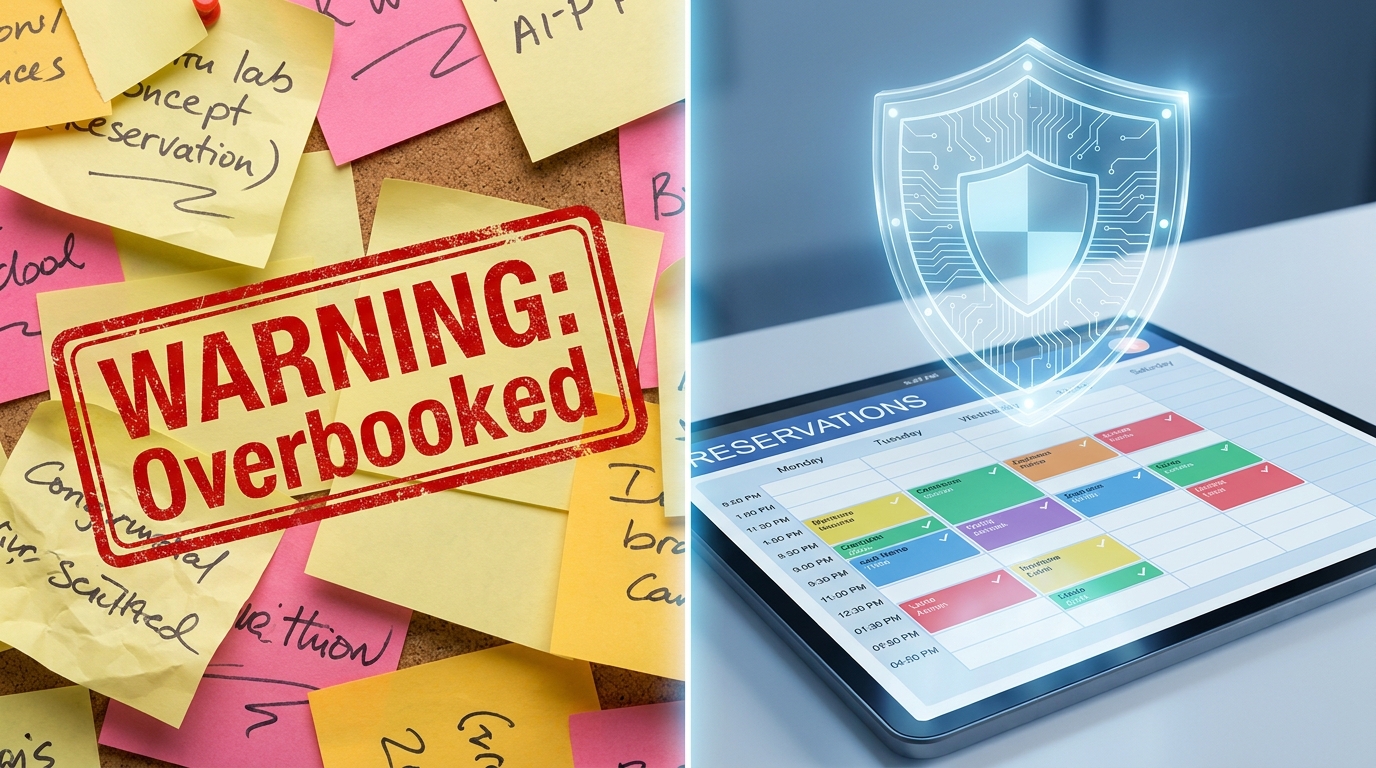
Diversifying your distribution strategy is the only way to scale a modern short-term rental enterprise. Relying on a single Online Travel Agency (OTA) leaves your business highly vulnerable to algorithmic shifts and sudden account suspensions. To maximize occupancy and revenue, you must list your properties simultaneously across multiple platforms. However, casting a wider net introduces the single most destructive operational risk in the hospitality industry: the double booking.
When your property is live on multiple channels without enterprise-grade digital infrastructure, you are playing a dangerous game of chronological roulette. If you want to successfully manage a portfolio and prevent double booking airbnb vrbo disasters, you must abandon amateur synchronization methods and adopt professional technology. Here is a comprehensive risk mitigation breakdown of the financial devastation caused by overlapping reservations, and the technological architecture required to eliminate them entirely.
The Nightmare Scenario: The Overlapping Arrival
To understand the necessity of robust technology, you must first visualize the operational catastrophe of a double booking.
Imagine it is 4:00 PM on the Friday of a lucrative holiday weekend. A high-paying guest, who booked your flagship property six months in advance via VRBO, pulls into the driveway with their exhausted family. They retrieve the key code, open the front door, and immediately freeze. There is luggage in the hallway, and another family is unpacking groceries in the kitchen.
The second family booked the exact same property via Airbnb just four hours ago. You are now facing two furious guests, a ruined vacation, and an impossible logistical nightmare. You cannot ask a family to leave, and you have nowhere else to put the second family because every hotel in a fifty-mile radius is completely sold out for the holiday. Your reputation is instantly destroyed, and the financial bleeding is about to begin.
The Brutal Penalties of Host Cancellations
The OTAs view double bookings as a cardinal sin. Their entire business model relies on consumer trust. If a guest cannot trust that their confirmed reservation is actually secure, they will abandon the platform entirely. To protect their brand, platforms have instituted draconian penalties for hosts who initiate cancellations due to overlapping bookings.
-
Devastating Financial Fines: Airbnb imposes severe financial penalties for host-initiated cancellations, which can frequently reach up to $1,000 per canceled reservation depending on how close the cancellation is to the check-in date.
-
The Relocation Mandate: If you double-book a guest on Booking.com, you are legally and contractually obligated to find them alternative, comparable accommodation. If the only available hotel room costs three times what your rental cost, you are forced to pay the difference out of your own pocket.
-
Algorithmic Suppression: The OTAs will instantly tank your search ranking. After a host cancellation, your property will be buried deep in the search results, starving you of future organic revenue.
-
Loss of Elite Status: A single double booking will instantly strip you of your Airbnb Superhost or VRBO Premier Host status, completely removing the trust badges that drive your highest-converting traffic.
-
Automated Negative Reviews: Platforms will frequently auto-generate a permanent public review on your listing stating that the host canceled the reservation, permanently warning future guests away from your property.

The Technological Trap: iCal vs API Sync Vacation Rental
The vast majority of double bookings occur because amateur hosts rely on outdated technology to manage their calendars. When setting up multi-channel distribution, many operators try to cut corners by utilizing basic iCal (iCalendar) links to connect their platforms.
You must understand the fatal flaw in the ical vs api sync vacation rental debate. iCal is a legacy calendar format designed for basic personal scheduling, not high-speed e-commerce. When you link Airbnb and VRBO via iCal, the platforms do not communicate in real-time. Instead, they periodically ping each other to check for updates. This sync cycle can take anywhere from two to six hours.
If a guest books your property on Airbnb at 1:00 PM, that block will not reflect on your VRBO calendar until the next iCal ping occurs at 5:00 PM. You have a massive four-hour window where your property appears completely available on VRBO when it is actually sold out. If a second guest books during that dark period, a double booking is mathematically guaranteed.
The Superiority of Real Time Calendar Sync Software
To safely distribute your listings across the globe, you must deploy enterprise-level real time calendar sync software via a dedicated channel manager.
Modern channel managers abandon iCal entirely and utilize direct Application Programming Interface (API) connections. An API acts as a high-speed, two-way data bridge between your central property management system and the OTAs. It does not wait hours to sync; it operates instantaneously.
When a booking occurs on any connected platform, the following API workflow happens within milliseconds:
-
The booking platform captures the guest’s payment and confirms the reservation dates.
-
The platform pushes the reservation data directly to your central channel manager.
-
The channel manager instantly blasts a “block dates” command to every other connected API channel.
-
Your calendar is locked globally before a second guest even has time to type their credit card number into a competing website.
Securing Your Distribution Network
This instant API technology is particularly critical when integrating a booking.com channel manager. Because Booking.com operates heavily on an “Instant Book” model with zero host vetting required, your calendar accuracy must be absolute. The platform will not forgive a double booking caused by a slow calendar sync.
Flawless short term rental calendar synchronization is not an optional luxury; it is the fundamental bedrock of your operational risk management. You cannot scale a hospitality business if you are constantly terrified of overlapping reservations. Stop gambling with your business reputation using delayed iCal links. Invest in a professional channel manager, secure direct API connections to your booking channels, and guarantee that when your guests arrive, the only thing waiting for them is an impeccably clean, empty property.
Operational Disclaimer: The risk management strategies, software integrations, and operational procedures discussed in this guide are for B2B educational and strategic planning purposes only. They do not constitute formal legal, financial, or IT security advice. OTA cancellation policies, penalty fee structures, and API synchronization capabilities change frequently based on platform updates. Always thoroughly review the specific Terms of Service for each booking channel and consult with your software vendor before deploying multi-channel distribution strategies.